Do Not Break It

At 10:16 on Sunday morning the President of the United States posted the following, in full: "Effective immediately, there is an ENERGY CEASEFIRE in the War between Russia and Ukraine. Both parties have agreed. Do not break it! Thank you for your attention to this matter." It came less than an hour after Volodymyr Zelensky's taped interview aired on ABC, in which he had offered exactly that trade, Ukraine's strikes on Russian refineries for Russia's strikes on Ukraine's grid, and asked the President to carry it to Moscow. Zelensky learned of the agreement the way everyone else did. "It was news for me," he told Axios that afternoon. "If President Trump negotiated it with Putin, please tell us when the ceasefire begins." A senior Ukrainian official told the Kyiv Independent that nobody in the government had heard of it and that they doubted Moscow had either. Moscow said nothing on Sunday at all. By evening a White House official had told Axios the real shape of the thing: "The Russians are thinking about it. We will know soon if they are ready." Both parties have agreed, and the Russians are thinking about it, from the same building, on the same day.
Russia answered at about eight o'clock Kyiv time, two hours and forty-five minutes after the post, by hitting Kharkiv's CHP-5 power plant at least twice. Then a missile into a grocery store in a Kharkiv suburb, three dead. Overnight, 121 attack drones, a Naftogaz gas-production site in the Kharkiv region, an energy facility in Zhytomyr, and at least ten dead across the country by Monday noon. Ukraine, for its part, held its fire. "Last night, Russian oil refineries were not burned," Zelensky said on Monday. On Monday the Kremlin spoke. Dmitry Peskov said that "contacts are ongoing" and that as soon as there was anything to say, he would say it. In the same briefing he said that President Putin and officials at every level "have repeatedly stated that we do not want a ceasefire." Sergei Lavrov said Zelensky had not "earned a respite" and that Russia would not "once again fall for assurances and promises." Zelensky, speaking to the Warsaw Security Forum, put it more simply. "We didn't know about it. We learned from the media." And: "It was clear that Putin does not read Truth Social."
The President does. As of this writing, Monday afternoon, he has posted since the ceasefire about Columbus Day, Roy Cooper, Jack Smith, a column about Mamdani, his rallies, and a new press secretary. Nothing about Kharkiv. Nothing about Russia. Nothing to the man who, by the Kremlin's own account, does not want the ceasefire the President announced in his name. The only word from the White House came anonymously, to Axios, on Monday morning: "Trump is really mad. He feels Zelensky is taking the U.S. for granted." Ukrainian officials told the Financial Times and the Kyiv Independent that American officials had been calling Ukraine's top military commanders over the weekend with threats to cut off intelligence sharing and the weapons-purchase channel if the refinery strikes continued; a deputy head of Zelensky's office confirmed he had received them. So the ceasefire the President declared was broken, by Russia, inside three hours, and the President is angry at Ukraine. This is the same President who told reporters on Friday that Zelensky "better damn well stop" and that "it's time for Ukraine to get a new president," and who posted the day before that he was "about to settle, or win, two more, Iran and, Russia/Ukraine. They're both happening at breakneck speed."
Fairness first. Zelensky proposed this exact deal on Sunday morning, and it is a good deal, because an energy truce would keep Ukrainian cities lit and heated through a winter in which Russia has been hitting the grid two hundred times a week. The paper also notes that the "refinery for refinery" version the White House described is a trade of something for nothing. Ukraine has one refinery, badly damaged long ago, and imports its diesel; what it needs protected is its power plants, which the White House said "could come next." The paper will also grant the President his record, because he has one. "Vladimir, STOP!" in April of last year. "He has gone absolutely CRAZY!" that May. "We get a lot of bullshit thrown at us by Putin" at a cabinet meeting in July. "A paper tiger" in September. And in October of last year, sanctions on Rosneft and Lukoil, the first new ones of his term. Those happened. Now look at what followed each. "Vladimir, STOP!" was posted at 7:36 in the morning; by that afternoon he was telling reporters "I think he wants to make a deal." After "CRAZY," the Kremlin diagnosed him with "emotional overload," and ten days later he reported "a good conversation." After "bullshit" came a fifty-day deadline, then a ten-day deadline, then the deadline passed with nothing, and thirty-eight days after the word he was applauding Putin on a red carpet in Anchorage. Two days after "paper tiger" he said he would not call anyone a paper tiger, and seventeen days after it he posted "Thank you to President Putin!" for a kind word about the Nobel. Sixteen days after the sanctions, the cancelled Budapest summit "could still happen." Since then, nothing. In 2026 he has posted about Putin twice, both times warmly, and has not said one critical word about him in ten months. The harshest sentence he has ever uttered about the man begins "I've always had a very good relationship with Vladimir Putin of Russia, but something has happened to him." He has never called him a killer; offered the word in 2017, he answered, "you think our country's so innocent?" He has never called him a war criminal. He has never given him a nickname, and he has given one to more than a dozen other heads of state.
Sunday's announcement was not the first of its kind. It was at least the fourth. On March 18 of last year the President posted that "we agreed to an immediate Ceasefire on all Energy and Infrastructure"; the Kremlin's readout said energy only, for thirty days, and that night Russia sent more than a hundred drones and six missiles and hit two hospitals in the Sumy region. On May 19 of last year: "Russia and Ukraine will immediately start negotiations toward a Ceasefire." Six days later came the largest air attack of the war to that point, 298 drones and 69 missiles, and the negotiations never started. This January he said he had personally asked Putin to spare Kyiv for a week, "Sunday to Sunday"; the Kremlin said the pause ended February 1, and on February 3 Russia fired 71 missiles and 450 drones at power plants in a cold snap. The President's verdict: "He kept his word on that." On September 14 of this year: "Ukraine has agreed not to hit Russian Energy targets. Russia has agreed to do, likewise!" The Kremlin declined to say whether it had, the Financial Times reported that it had not, Ukraine hit the Syzran refinery the next day, and, in the AP's phrase, nothing came of it. Then this month. On Putin's birthday, October 7, the morning after a Russian cruise missile took down half an apartment block in Pryluky, the President told reporters, "I have a call set up. Today is his birthday." The Kremlin said the next day that no call had taken place and that no birthday telegram had arrived. Putin took the call on Friday, after he got back from Turkmenistan, and came away with a license to sell diesel into the world market through April 7 of next year. On Saturday Russian glide bombs killed at least twenty people in Zaporizhzhia, and Zelensky said Russia had "said thank you for the lifting of sanctions on diesel exports by dropping five glide bombs on residential buildings." On Sunday the President declared the ceasefire.
A correction, since this column is about standards. On Saturday this paper wrote that the President called Putin on his birthday. He did not. He announced that he would, the Kremlin said the next day that he had not, and the call came two days later. The piece has been corrected, and the paper notes that the true version is worse.
Now consider what happens to everyone else, because the record there is long and the response times are short. On January 6, 2021, eleven minutes after his Vice President was evacuated from the Senate with the mob inside the building, he posted that "Mike Pence didn't have the courage to do what should have been done." When Elon Musk wrote that without him Trump would have lost, the President had a post up that afternoon proposing to "terminate Elon's Governmental Subsidies and Contracts," and by the next morning Musk was "the man who has lost his mind." When General Milley's China calls came out, the punishment "in times gone by" would have been "DEATH!"; Milley's portrait came off the Pentagon wall within hours of the inauguration, and his security detail and clearance followed in nine days. John McCain was "a war hero because he was captured. I like people who weren't captured," and when he died the White House flag went back up to full staff a day and a half later. Jeff Sessions recused himself and got two years of abuse and the President's endorsement of his primary opponent. John Bolton wrote a book; his Secret Service detail ended at noon on the first day of the new term, the FBI searched his house in August of last year, he was indicted on eighteen counts in October, pleaded guilty to one in June, and will be sentenced on October 28. Rex Tillerson called the President undisciplined and was "dumb as a rock" and "lazy as hell" by the next day. The President posted "Pam... JUSTICE MUST BE SERVED, NOW!!!" on a Saturday evening and James Comey was indicted the following Thursday. Thomas Massie voted no and signed the Epstein petition and got "RUN, ED, RUN," and lost his primary in May. Marjorie Taylor Greene called the Epstein stance a miscalculation on CBS in the morning and was "Marjorie 'Traitor' Greene" by the next day, and resigned. Thom Tillis voted no at night, was "MISSING IN ACTION" within hours, and announced his retirement the next morning. Rosie O'Donnell posted a video about the Texas floods and five days later the President was "giving serious consideration to taking away her Citizenship. She is a Threat to Humanity." Taylor Swift endorsed the other candidate and five days later: "I HATE TAYLOR SWIFT!" Bruce Springsteen called the administration treasonous from a stage in Manchester; forty hours later he was a "dried out 'prune' of a rocker," and three days after that the President was calling for "a major investigation" into whether he had been paid to perform. Jimmy Kimmel made a joke about the right and that evening the President was congratulating ABC on cancelling him, and the next morning suggesting the network's licenses "should be taken away." Pope Leo called a threat to destroy Iranian civilization unacceptable; three days later, "If I wasn't in the White House, Leo wouldn't be in the Vatican." Friedrich Merz said the Americans were being humiliated by Iran, and within four days the Pentagon had orders to pull five thousand troops out of Germany. Mark Carney gave a speech in Davos and the next day heard, "Remember that, Mark, the next time you make your statements." Zelensky objected to the diesel deal on Friday morning and by Friday afternoon it was time for Ukraine to get a new president. And in July of last year, when Dmitry Medvedev, Putin's deputy on the Security Council, posted about Russia's "Dead Hand" nuclear system, the President ordered two nuclear submarines repositioned, in under twenty-four hours. Fourteen days later the man Medvedev works for landed in Alaska to a red carpet, a B-2 flyover, a ride in the President's limousine, and the first turn at the microphone, where he said, in English, "And next time in Moscow."
Set that against what Putin has done to him, in public, on camera. In Helsinki in 2018 Putin arrived forty minutes late and the President stood beside him and said of his own intelligence agencies, "I don't see any reason why it would be" Russia; asked whether he had wanted Trump to win, Putin said, "Yes, I did." In March of last year Putin kept a scheduled call waiting fifty-two minutes while he finished at a business forum, and when his spokesman reminded him of the time, said, "Don't listen to Peskov," to laughter. The President has never mentioned it. After "CRAZY," the Kremlin's "emotional overload" went unanswered; asked whether it was disrespectful, the President said he would let us know in two weeks. On July 3 of last year he reported "I didn't make any progress with him today at all," and that night Russia put 539 drones and 11 missiles into Kyiv, the largest attack of the war to that point, and the next day, asked whether Putin was mocking him, he said, "No, I don't think he is... he's a professional." Last December Russia hit Kyiv with more than five hundred drones and forty missiles in twelve hours; the next day the President had "a good and very productive telephone call," and the day after that, when Putin claimed Ukraine had attacked his residence, the President's complaint was that "it's another thing to attack his house." On September 8 of this year he had "a great conversation with Putin," and on September 9 Putin's aide said the way for America to help end the war was to "stop providing any assistance to Kyiv." Then the birthday, the missing call, the telegram that never came, the diesel, Zaporizhzhia, the ceasefire, Kharkiv in under three hours, and a spokesman saying his government does not want one. The Daily Beast's monitor of Russian state television reports that hosts there have a pet name for him, Trumpusha, and that one has called him "our agent Trump." The President has never responded to any of it.
The paper was asked to check whether anyone else gets this treatment, and checked hard, and the honest answer is that Putin is not alone. Kim Jong Un has tested missiles for seven years, declared the Singapore agreement "scrapped and nullified" last November, and still gets "I'd love to meet." Xi gets tariffs on his country and, in Beijing in May, "it's an honor to be your friend." Mohammed bin Salman got "things happen" and "you don't have to embarrass our guest." Nor is it only strongmen. Nick Fuentes called him a scam artist and told his followers to vote Democrat, and the President's response was "get the word out." Joe Rogan compared ICE to the Gestapo and was "a great guy." So the rule is not that dictators get a pass. The rule is that people who can still give him something get a pass, and the question is what each of them has to give. Rogan has an audience. Xi has a market. Putin, on the innocent reading, has a peace deal, a Nobel, and three million tons of diesel before November 3, and the paper will not pretend that reading is impossible. It will only note that it does not explain Helsinki in 2018, or the summer of 2016, when there was no prize, no diesel and no election to save, and the behavior was the same.
Which leaves the other reading, and here the paper will say only what is documented. The famous allegation, the hotel tape, has been chased by the FBI, a special counsel, an inspector general and a second special counsel, and none of them found it; the Senate Intelligence Committee's bipartisan report "did not establish that the Russian government collected kompromat on Trump." The President raised it himself, unprompted, at dinner with the FBI director in January 2017, saying "there were no prostitutes; there were never prostitutes," and Robert Mueller's report records a text to Michael Cohen in October 2016 that read, "Stopped flow of tapes from Russia but not sure if there's anything else." Suppose it existed. The paper's view is that it would not make the top five. This is a man who survived the Access Hollywood tape, a jury's finding that he sexually abused a woman, affirmed on appeal and collected in July, thirty-four felony convictions, a birthday letter in Jeffrey Epstein's book, three and a half million pages of Epstein files released under a law that passed 427 to 1, two impeachments, and a special counsel's written conclusion that the evidence against him "was sufficient to obtain and sustain a conviction at trial." Nobody who walked through that list is being held by a hotel video. If something holds him, it is something else, and here is the floor of what is known. His company signed a letter of intent for a Trump Tower in Moscow in October 2015 and Michael Cohen kept him updated on it through June 2016, during which the candidate said "I have nothing to do with Russia" five times in a single press conference. Cohen's partner on the deal, Felix Sater, wrote him in November 2015: "Buddy our boy can become President of the USA and we can engineer it. I will get all of Putins team to buy in on this." The Republican-led Senate Intelligence Committee, with Marco Rubio as acting chairman, found in 2020 that the campaign chairman's business partner Konstantin Kilimnik "is a Russian intelligence officer" and that the chairman's sharing of internal polling data with him was "a grave counterintelligence threat." The President's son said in 2008 that "Russians make up a pretty disproportionate cross-section of a lot of our assets." A Palm Beach house the President bought for forty-one million dollars sold to a Russian fertilizer billionaire for ninety-five million. In May 2017 he barred the American press from the Oval Office, admitted the Russian foreign minister and ambassador, and told them, "I just fired the head of the F.B.I. He was crazy, a real nut job. I faced great pressure because of Russia. That's taken off." After his first meeting with Putin he took his interpreter's notes and told her not to discuss it; in Helsinki there was no American note-taker at all. And last month ProPublica reported that a boxing executive decorated by Putin paid for the festivities at Donald Trump Jr.'s wedding, which the President confirmed this way: "he said, 'I'm paying him back, Dad.'" The paper does not know what Putin has. It knows what the President does to everyone who embarrasses him, and it knows what he does not do to Putin, and it can do subtraction.
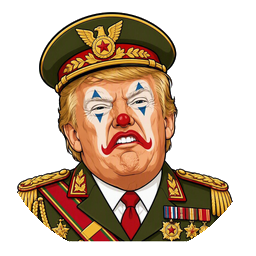
A word about the people who get paid to do this. Credit where it is earned: most of Sunday's first headlines did say "Trump says," Axios got the "thinking about it" quote on the record within hours, France 24's lede read "Neither Kyiv nor Moscow confirmed the agreement," and MS NOW and the Russian exile outlet Meduza were the only ones the paper found who used the word "again." Now the rest. The New York Post: "Russia, Ukraine reach energy cease-fire 'effective immediately,' Trump reveals." Fox News: "both sides agree," in a story that quoted neither side. Bloomberg's first headline: "Russia, Ukraine Reach 'Energy Ceasefire.'" And by Monday morning, after Kharkiv, the frame everywhere was the one the White House would have written. CNN: Russia "has already violated Trump's surprise energy ceasefire." Sky News: "Putin has already broken Trump's 'energy ceasefire.'" The Financial Times: "Putin is breaching." Reuters: "violating Trump's energy ceasefire." The Times of India, never subtle: "Putin 'Betrays' Trump!" A thing has to exist before it can be broken. The reader who saw only the headlines now believes there was a ceasefire, that Russia broke it, and that the President was wronged, which is three errors in a row, and the third is the one that matters, because it is the story he needs before November 3. Not one of the American majors the paper checked mentioned the March 2025 announcement and the hospitals in Sumy that night; the only reference to it the paper could find was in the Kyiv Post. A few mentioned September 14. None of them counted. The paper is a clown paper. It rates the news with clowns and plays a tune under it. It had the Kremlin's silence, Zelensky's "news for me," and the March 2025 hospital strike in hand before it wrote a word, because all three were on the public record on Sunday afternoon, and finding them cost nothing but the work. That is the whole of the paper's standard and it is apparently a high one.
In that spirit, one item the paper is not going to run. Ukraine has hit three Yandex data centers in four days, Sasovo, Kaluga and Vladimir, and knocked out two of the company's three AI supercomputers and much of the Russian internet with them; that is real, confirmed by Yandex itself. What followed on social media was a chart showing automated traffic from Yandex's network dropping by ninety-odd percent, and from it a story that the strikes had killed the Russian bot farms, that the President's feed had gone quiet of AI videos of himself as a superhero, and that his Truth Social replies were now just real Americans angry about gas. A Czech member of the European Parliament ran with it, a Yale historian ran with it, and the French press ran with it. The paper wanted it to be true. It is not. The chart measures Yandex's own search crawler, the researchers who actually track Kremlin troll networks say the bots are fine, and the superhero line turns out to come from a Substack column of joke headlines. The replies under the President's gas-price posts have been angry since September, and that has nothing to do with Vladimir. The paper checked. That is also the standard.
The President wrote "Do not break it!" to two parties, one of which had not agreed and does not read him. The other broke it in under three hours and then said, through its spokesman, that it does not want one. His reply, through an aide, was that he is angry at the victim. Five clowns, and the election is November 3.