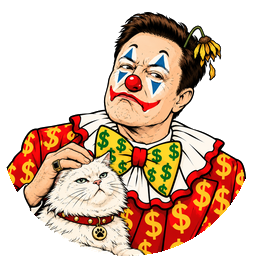
Ultimately POTUS
On Tuesday night, without warning, somebody slowed down the network Ukraine's drones fly on. Starshield, the military version of SpaceX's Starlink service, began throttling or dropping terminals moving faster than about a hundred miles an hour, which is a precise description of a drone in flight. Ukraine's armed forces learned about it, NBC reported, from SpaceX customer support, after they filed a complaint. On Wednesday Elon Musk explained where the complaint should have gone: "Any limits on speed or usage are decided by the US military and ultimately POTUS." On Thursday Reuters, citing two American officials and a Western one, reported that the order had come from inside the White House: Pentagon leaders had been told that Starshield service for Ukraine's military needed to be slowed. Reuters' sources did not say who gave the order. A senior American official said, "No such request was ever made by the president," and the White House would not say whether someone else in it had made one. On Friday the President told reporters, "Well, I don't know if it was anybody because it wasn't me, and I don't think it was Elon. And from what I understand, it's the same as it's always been." Note what he did not say. He did not say he would find out who did it. He did not say it should not have happened, or that anyone would answer for it. As of this writing, neither he nor the White House has announced any inquiry into who, inside his own building, slowed down an ally's drones in the middle of a war, a decision Zelensky said "will bring a lot of human losses." A President who learned that someone under his roof had done that without him would want a name by lunch, and would want the world to see him get it. This one said it is the same as it has always been. That leaves three possibilities. He already knows who did it. He does not care who did it. Or it was him, and he is lying. Also on Friday, the Telegraph reported, from four unnamed sources, that Musk had proposed the slowdown and the President had agreed. "They were both in it," one of them said. Nobody has confirmed that, and the paper reports it only as what the Telegraph says. Here is what the paper can report without anyone's help. The richest man in the world says the President decides. The President says nobody did it. Service came partly back on Wednesday, and on Friday Volodymyr Zelensky told European leaders it was still "not fully restored."
The rest of the week, briefly, because this paper covered its start on Monday. On Sunday the President announced an "ENERGY CEASEFIRE" that neither Russia nor Ukraine had agreed to, and Russia hit a power plant in Kharkiv inside three hours. Asked about it, he said "there's been violations on both sides," and explained the agreement this way: "They agreed. You know why? Because I said, 'You agree' – that's why." Ukraine stopped hitting Russian refineries for several days anyway. Russia stopped nothing. On Monday night and again on Tuesday, Russian ballistic missiles flew at Kyiv and Ukraine got no early warning from its partners. CBS, citing officials, reported that the United States "may have intentionally withheld" it. In fairness, Ukraine's own foreign minister said the cooperation continues and blamed an unusual type of missile, and the President said, "We are sharing intel." The same weekend, CNN, the Financial Times and Reuters reported that Washington had warned Kyiv and the European capitals that it could suspend PURL, the arrangement under which European governments buy American weapons for Ukraine with their own money, along with intelligence sharing, if the refinery strikes did not stop. The American ambassador to NATO said he knew "of no change to that program." So, threatened and not yet done, and the paper will say no more than that. On Tuesday evening Russia sent 39 ballistic missiles and more than a hundred drones, hit all three of Kyiv's combined heat and power plants, and left at least 600,000 people without electricity. The Washington Post, citing Ukrainian and NATO officials, reported that Ukraine was down to "only a couple" of Patriot interceptors, a shortage blamed on a world supply drained by the Iran war, not on the threat. "Ukraine can't get by on just two or four missiles from a country every few months," Zelensky said in Brussels. On Thursday he ended the pause. "The block is out. We're done." Ukraine hit Rosneft's refinery at Ryazan. That night the President went on Newsmax: "All he's doing is making the world oil price higher. I think that's a disgrace. There's plenty of other targets; they don't have to hit." And: "I find Zelenskyy to be more difficult to deal with than Putin." Four days of Russian missiles at Ukrainian power plants were violations on both sides. One Ukrainian strike on a Russian refinery was a disgrace. On Friday, at the European Council in Brussels, a Sky News reporter asked Zelensky whether he thought he was being treated as a scapegoat for the President's own problems. Zelensky took a long pause, smiled, and said, "This is my answer." The room laughed. The same day the Wall Street Journal reported that two Republican senators, Roger Wicker and Kevin Cramer, had brought him an offer in Kyiv: Ukraine stops hitting Russian refineries for a hundred days, and in return Starlink coverage extends about 300 kilometers into Russia, so Ukraine can find and destroy the launchers that fire the missiles at its cities. According to the Journal, Zelensky signaled he was willing. The night before, the President had told Newsmax that Zelensky "says he wants to settle, but he doesn't." Here was a settlement, on the President's own priority, the refineries, and the price was a satellite signal a few hundred kilometers long. The paper notes who would have to switch it on. And overnight into Saturday, as this page was going to press, Russia sent ballistic and cruise missiles and more than three hundred attack drones at Ukraine, and Zelensky said more than fifteen "critical power generation and transmission facilities" were targeted, in what he called one of Russia's largest attacks on the country's energy sector. Civilians were killed. Ukraine's power company announced emergency blackouts across several regions. The President has not yet called it anything.
The paper has written about the President and Vladimir Putin until its readers can recite it. It has not written about the third man, the one whose company runs the network and who has said, in public, that he knows exactly what that network is worth. So, fairness first, because he earned some. Two days after the invasion in February 2022, Ukraine's digital minister asked him on Twitter for Starlink, and the terminals arrived within days, some donated by SpaceX and some paid for by the American government. They kept Ukraine's army and government talking while Russia was trying to cut both, and that mattered, and the paper says so. Then September 2022, when, by Walter Isaacson's account and Musk's own confirmation, he declined to switch on coverage for a Ukrainian drone attack on the Russian fleet at Sevastopol, because, he said, it would have made SpaceX complicit in "a major act of war." Then March 9 of last year: "Their entire front line would collapse if I turned it off." Poland's foreign minister, Radek Sikorski, pointed out that Poland pays about fifty million dollars a year for those terminals. "Be quiet, small man," Musk answered. Hours later he added that Starlink "will never turn off its terminals," and "We would never do such a thing or use it as a bargaining chip." Last Saturday he posted that "Zelensky has gone too far." On October 8 the President hung the National Medal of Science around his neck and called him "our modern-day Thomas Edison." Since July, CNBC reports, he has given about $276 million to Republican groups, which makes him the largest known donor of the midterms. That is the man whose network went slow on Tuesday night.
Where he came from. Musk was born in Pretoria in 1971 and left South Africa at seventeen, by his own account partly to avoid conscription into the apartheid army, which he once joked did not seem like a good use of time. His mother's father, Joshua Haldeman, had moved the family to Pretoria in 1950; the historian Jill Lepore describes him as a pro-apartheid, antisemitic conspiracy theorist, and he wrote a book defending the system. His father, Errol, sat on the Pretoria city council in the 1970s and early '80s, joining the Progressive Federal Party, one of the few legal parties that opposed it. The paper has found no evidence that Elon Musk himself supported apartheid and will not imply it. It will note what he has said about South Africa since. Last year he posted that a major South African party "is actively promoting white genocide," a claim a South African court had already called "clearly imagined and not real." That May his chatbot, Grok, began answering ordinary questions with lectures on "white genocide," and his company blamed an "unauthorized modification" made at 3:15 in the morning and has never said who made it.
How he got here. Musk entered the United States legally in 1995, admitted to a graduate program at Stanford that he never attended. The Washington Post reported in 2024 that he then worked here without authorization while building his first company, Zip2, citing former associates, court records that include an email of his own from 2005, and a 1996 investor agreement that gave him and his brother forty-five days to get legal work status. Musk says he was "in fact allowed to work in the US" and that "the Biden puppet is lying." The paper reports the Post's account and his denial, and notes that the man in the middle of this dispute has spent two years as the loudest voice in American politics on the subject of people who work here without papers.
What he built. Tesla was incorporated in 2003 by Martin Eberhard and Marc Tarpenning. Musk led its funding round in 2004 and became chairman. In 2009 Eberhard sued, in part over Musk calling himself a founder, and the settlement allowed five men, Musk among them, to use the title. He is a founder of Tesla the way a man who buys a house becomes its architect: by agreement, after the fact.
How he treats people who are braver than he is. In 2018 twelve boys and their soccer coach were trapped in a flooded cave in Thailand, and divers got all thirteen out alive. Musk had a miniature submarine built and flown in, and Vern Unsworth, a British caver who had helped guide the rescue, called it a PR stunt. Musk called him "pedo guy" on Twitter, deleted it and apologized, and then, in emails to BuzzFeed News, called him a "child rapist." There was never any evidence for any of it; BuzzFeed found none, and neither did the investigator Musk's own side hired. Unsworth sued for defamation, and in December 2019 a jury in Los Angeles took less than an hour to find Musk not liable. The paper reports the verdict as it stands. The law said he was allowed to say it. His explanation on the stand was, "It was wrong and insulting, so I insulted him back." The diver had saved children. The billionaire had built a submarine nobody used.
What he puts in himself, since it has come up in his own words. The Wall Street Journal and the New York Times have both reported heavy drug use, the Times saying last year that he used ketamine often, sometimes daily, and traveled with a daily box of about twenty pills, some marked as Adderall. Musk says he has a ketamine prescription, "a small amount once every other week," and that "I am NOT taking drugs!" The paper reports both and decides nothing, except that this is the man who was handed the federal government's payment systems.
What he does with his arm. On January 20 of last year, at a rally in Capital One Arena, Musk put his right hand on his chest and thrust the arm out, palm down, then turned and did it again. The Anti-Defamation League called it "an awkward gesture in a moment of enthusiasm." Historians disagreed with one another. Musk said, "The 'everyone is Hitler' attack is sooo tired." Three days later he posted a string of puns built on the names Hess, Goebbels, Göring and Himmler, with a laughing emoji, and the ADL, which had defended him, said the Holocaust is not a joke. Two days after that he appeared by video at a rally of Germany's far-right AfD and told the crowd there was "too much focus on past guilt." The paper will not tell its readers what was in his heart. It will tell them the order of events: the arm, the "jokes," the rally.
What he did with the election. In October 2024, at an event in Harrisburg, Musk announced that his America PAC would give a million dollars a day to registered voters in the swing states who signed its petition, awarded, he said, "randomly." The day before the election, in a Philadelphia courtroom, the PAC's own lawyer told the judge that the winners "are not chosen by chance." They were picked as paid spokespeople and signed contracts. The PAC's treasurer said "random" was not the word he would have selected. The judge let the giveaways go on. People who signed up sued for fraud, and on Thursday, two days before this page went to press, Musk and the PAC settled both suits, denying the allegations, on terms nobody has disclosed. Seven months after the election he told the country what he thought his money and his platform had done: "Without me, Trump would have lost the election." The paper has no proof the election was stolen, by him or by anyone, and does not claim it was. It notes only that the two men involved keep saying things that invite the question. At his victory rally the night before the inauguration, thanking Musk for his weeks in Pennsylvania, the President said Musk "knows those computers better than anybody," and specified which ones: "those vote counting computers." Fact-checkers found no evidence he meant anything by it, and he has never explained it. And the man who paid the spokespeople believes he is the reason the President won, and said so in writing.
What he did with the government. DOGE was going to find two trillion dollars. Then one trillion. Then, at a cabinet meeting in April of last year, $150 billion. Its online "wall of receipts" counted an eight-million-dollar ICE contract as eight billion and listed one USAID item three times, and NPR could verify only about two billion dollars of the fifty-five billion the site claimed at the time; the Partnership for Public Service estimated that DOGE's own actions would cost taxpayers about $135 billion that year. "We spent the weekend feeding USAID into the wood chipper," Musk posted on February 3. A model published in the Lancet projects about fourteen million additional deaths by 2030, four and a half million of them children under five, if those aid cuts stand, and a Boston University tracker estimated more than 330,000 deaths by last June. Those are estimates, the State Department disputes them, and the paper calls them estimates. Musk's team included Edward Coristine, nineteen years old when he was reported to be working inside federal agencies, who went online as "Big Balls" and whose internship at a cybersecurity firm had ended, Bloomberg reported, after an internal probe into leaked company information; he denies wrongdoing. At Social Security, the Supreme Court let the DOGE team into unredacted records, and the agency's own chief data officer, Charles Borges, filed a whistleblower complaint saying DOGE-affiliated staff had copied the master file of every American's Social Security number, more than 300 million records, into a cloud environment without independent oversight. The agency says the data is secure. Borges is gone.
And what happened to the people who were watching his companies. The firing of seventeen inspectors general one Friday night in January of last year was the President's order, and the paper puts it where it belongs. The rest has Musk's fingerprints near it. DOGE's cuts at the highway safety agency took three of the roughly seven people in its new office for self-driving cars while that agency was investigating Tesla's Full Self-Driving. The head of the FAA, which had proposed a $633,000 fine against SpaceX, resigned on Inauguration Day after Musk had called for his resignation. The President fired a member of the labor board while the board was pursuing a case over eight SpaceX employees fired for complaining. The Senate investigations subcommittee's Democratic staff counted 65 actual or potential actions against his companies by eleven agencies, with at least $2.37 billion in potential liability. And the Securities and Exchange Commission, which sued him in January of last year over the Twitter stake he disclosed late and sought about $150 million back, settled with him in May for a civil penalty of $1.5 million. No proof of intent, and the paper claims none. Only the arithmetic.
Now look at the country on the other end of the slow connection. Ukraine was told, in the Oval Office, "You don't have the cards." It never did. It had almost no navy, and with sea drones and missiles it drove Russia's Black Sea Fleet out of Sevastopol and back to Novorossiysk, and reopened its own grain routes. On June 1 of last year it drove drones across Russia hidden in trucks and hit strategic bombers on airfields as far as Siberia, thousands of miles from the front. On the second night of the invasion its president stood outside his office in Kyiv with his prime minister, his chief of staff and two other aides and filmed a short video on a phone: we are all here. When the Americans offered to get him out, a senior American intelligence official told the Associated Press, he said he needed ammunition, not a ride, and he has since said so himself. A country with no cards that holds the line anyway, against an empire, with farmers and volunteers and whatever it can build in a garage, used to be the American story. It is the one Americans tell about themselves every Fourth of July. The President calls the man who lives it a dictator for not holding an election his constitution forbids in wartime, and finds him harder to deal with than the man who started the war. The man at the switch, who left one country to avoid serving its army and built his fortune in another on government contracts, tells him he has "gone too far."
So the paper will put it plainly. Vladimir Putin invaded. The President promised fifty-three times, by CNN's count, to end it in twenty-four hours, and later said that was "in jest." Putin got a birthday call, a diesel license through next April, and a ceasefire he never agreed to and did not keep. Zelensky got "a disgrace." And on Tuesday night, from inside the White House or from nowhere, depending on which of two friends you ask, the drones over Ukraine slowed down. Musk says ultimately POTUS. The President says it wasn't him and it wasn't Elon. Both cannot be telling the truth, and it is entirely possible that neither is. One of them said in March of last year that he would never use it as a bargaining chip. The other says it wasn't him, and has not asked anyone who it was.
A word about the face at the top of this page, since readers will ask about the cat. The face is new; the paper had it painted this week. Musk comes and goes from American politics, out after the bill and the Epstein post last summer, back for the medal and the money this fall, and a clown who wanders on and off the stage is usually a sideshow. This one owns the stage, the lights and the network the audience is using to watch, and this week he reminded everyone he can turn them down. As for the cat: the paper covers a lot of powerful men behaving badly, and it does not usually reach for the movies. But consider the résumé. A rocket company. A constellation of satellites hanging over a war, with a hand on the speed control. A company that puts chips in human brains. A company that digs tunnels under Las Vegas. A company town in Texas, incorporated last year, called Starbase. A product he sold to twenty thousand customers as the Not-a-Flamethrower. In Moonraker the villain was an aerospace tycoon with his own space program and firm views about who deserved to come along. In the others there was a man in a chair, stroking a white cat, deciding whose lights went out. The paper is not calling Elon Musk a Bond villain. A Bond villain, at least, explains himself. Five clowns. The election is November 3.