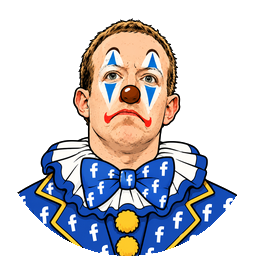
Clearly Taken in Error
Saturday was the fourth No Kings day since the President came back, and this one was built around ballots instead of bullhorns: nearly 3,000 events by the organizers' count, a lot of them block parties and cookouts with a drop box at the end of the walk, and Portland police put that city's downtown crowd alone at 40,000 to 50,000. The signs ran politer than in March, because the point was to vote and not to vent, but the paper has its favorites. In Port Huron, Michigan, a man in an inflatable frog suit carried "Frogs Against Fascism." In Olympia, Washington, a homemade sign read "No Cons, No Clowns, No Kings," and the paper objects to the middle third, since clowns are its livelihood. At the Lincoln Memorial a large inflatable donkey bounced beside a papier-mache head of the President, next to a sign that said "VOTE EARLY," and a Maryland horse trainer zipped into a donkey suit reading "Donkeys against Tyranny" was voting in a midterm for the first time. A sixteen-year-old held "I studied checks and balances in school for this." In Eugene, Mr. Incredible carried "Be Incredible, Be Antifa," and a climate group walked around with monarch butterflies as "the only monarchs we need." In Santa Rosa a man wore a cooking pot with stuffed frogs leaping out of it and explained, "If we don't vote, we are cooked." In Salt Lake City a woman in an orange jumpsuit and a Trump mask had dressed her dog as the jailer. A Eugene man looked over the inflatable unicorns and frogs and said, "It's hard to say we're hating America when you've got inflatable unicorns and frogs out here." That is the mob. The White House's answer to a day of people lining up to vote was that all the talk about voting "proves they should change their name."
At about 1:30 Eastern, with the rallies at full tilt, the No Kings Instagram account went dark. Ezra Levin of Indivisible said he got word from his team that "Mark Zuckerberg's Meta had suspended the Instagram account for the No Kings Coalition." It stayed down about an hour and a half, and when the page came back the organizers were still locked out of it for roughly four more hours, visible to everyone and unable to say a word. Meta's spokesman, Andy Stone, explained that accounts that post, share or comment "at very high frequencies" can trip automated systems, that "that automated action was clearly taken in error," and that "we sincerely apologize." The paper has no evidence that any human being at Meta ordered it, and it believes the robot did it. Readers should sit with what that means. Meta built a machine that, on the one Saturday of the year when a political movement would obviously post at very high frequencies, mistook that for spam and switched it off, and nobody at the company looked in on the biggest account in American protest politics until it had been dark long enough to make the news. "Clearly taken in error" is the kindest available reading, and the paper is going with it. It also means that the man whose name is on the building let the robots mind the midterms while he was busy elsewhere, and the paper has notes on where.
He and the President have a history, and the paper will tell it in order. In 2020 Mark Zuckerberg and his wife gave about $350 million to help local election offices run a vote in a pandemic, which the right christened "Zuckerbucks" and more than two dozen states have since banned. In January 2021 his company threw the President off Facebook and Instagram after the Capitol riot. In March 2024 the President called Facebook "an enemy of the people." That July he posted "ZUCKERBUCKS, be careful!" and in a book that September he wrote that if Zuckerberg steered Facebook against him again he would "spend the rest of his life in prison." About a week after the first of those threats, Zuckerberg sat down with Bloomberg and called the President's fist pump after the shooting in Butler "one of the most badass things I've ever seen in my life." That is the whole man in one sentence. Threatened with prison, he complimented the jailer.
Then the election. On November 6 he congratulated the President on "a decisive victory" and said he looked forward to working with him. Thanksgiving week he flew to Mar-a-Lago for dinner. In December Meta gave a million dollars to the inaugural fund, having given nothing to the inaugurals of 2017 or 2021. On January 6 he put Dana White, the President's friend and the boss of the UFC, on Meta's board. On January 7, four years to the day after Facebook banned the President, he ended fact-checking in the United States, announced that the moderation team would move from California to Texas, and said he wanted the President's help pushing back on foreign governments that go after American tech. Asked that afternoon whether Zuckerberg was responding to his threats, the President said, "Probably." Three days later Zuckerberg told Joe Rogan that corporate America needed more "masculine energy." He had a seat up front at the inauguration. On January 29 Meta paid the President $25 million to settle the lawsuit over the ban, $22 million of it to his presidential library, admitting nothing. At a White House dinner in September the President asked him how much Meta would spend in America, and he said "at least $600 billion through '28," and then a hot mic caught him apologizing: "Sorry, I wasn't ready. I wasn't sure what number you wanted to go with." Meta's name is on the donor list for the President's ballroom, in an amount the White House will not disclose. In March the President named him to the science council. In May he and Elon Musk talked the President out of an executive order on AI. All of it is public and none of it is illegal. The paper notes only the trajectory. The man was threatened with life in prison and responded by writing checks until the threats stopped.
Which brings up Musk, whom the paper covered yesterday. In June 2023 Musk offered Zuckerberg a cage match and Zuckerberg answered, "Send me location." Dana White, now on Meta's board, said this June that the negotiations were real and that Rome wanted $150 million to stage it in the Colosseum. Musk then needed surgery, then needed a practice round in Zuckerberg's backyard, and that August Zuckerberg posted that "Elon isn't serious and it's time to move on," to which Musk replied that Zuck is such a chicken he "can't eat at Chick-fil-A because that would be cannibalism." A year later Musk offered again, "any place, any time, any rules," and Zuckerberg answered, "Are we really doing this again?" Then the election, and the next February, court filings show, Zuckerberg texted Musk: "Looks like DOGE is making progress." He said Meta had put teams on alert to take down posts doxxing or threatening DOGE staff, and offered to help further. Musk sent back a heart and asked whether he would like to bid on OpenAI together. He had called the man a chicken eighteen months earlier. This March the President named Zuckerberg to the science council and left Musk off it. The paper does not know whether the two men like each other. It knows that each has now done exactly what the other was mocked for, in sequence, which is as close to friendship as billionaires get.
So here is the paper's position. The robot did it, and the robot works for a sniveling weasel. He took a shit ton of money, his own and his shareholders', and spent it making a man who had threatened to jail him stop saying so. He put the man's fight promoter on his board. He fired the fact-checkers on the anniversary of the ban and asked the man who threatened him to go fight Europe on his behalf. He texted the other billionaire who called him a chicken to offer help with the wood chipper. And on the Saturday that nearly 3,000 towns lined up to vote early, his machine switched off their microphone, and he let a spokesman say sorry. That is not a conspiracy. It is something a little worse: a company so busy kneeling that it forgot to look up. The face at the top of this page is new, and the paper had it painted this morning, because there was no way to write this one under anyone else's. Four clowns. The election is November 3, and the frogs are voting early.