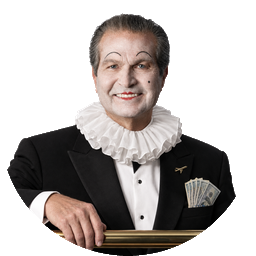
Right, Got You
The paper will start where the campaign would rather it didn't, which is with a recording from a campaign stop in east Georgia in April, made by what the Jackson campaign calls "a left-wing tracker" and what the paper calls a microphone. A voter is telling Rick Jackson, then a candidate in the Republican primary, that a woman who says she was raped should have to prove it before Georgia's six-week abortion law lets her end the pregnancy. "Right, got you," Mr. Jackson says. He goes on. A pregnancy from a rape is "still a life." Asked how you keep doctors in line, he explains: "Well, you basically make it against the law, No. 1. No. 2, they have to have evidence to prove in order to not have liability themselves." The campaign's position, when the tape surfaced in June, was that this was "an incorrect framing based on Democratic spin" and that "Rick strongly supports Georgia's current Heartbeat law and will defend it as governor." The paper has listened to the framing and the spin and the tape, and the tape has a man agreeing that a raped woman should bring evidence. Georgia's law already requires a police report for the rape exception. The man who wants to run the state would like the doctor to see it too.
Keisha Lance Bottoms, the Democratic nominee, asked the obvious question on October 12 to an empty podium, because that is what she was given. The Atlanta Press Club has run its Loudermilk-Young debates for every statewide race for decades, and its rule for a candidate who declines is that the podium stays on the stage with nobody behind it. Mr. Jackson formally declined. The club's producer confirmed it. Ms. Bottoms took the journalists' questions alone for half an hour and said: "Rick Jackson also asserted that you should have to prove that you have been raped in order to access an abortion. If he were here, I would ask, how do you prove that you have been raped in order to get an abortion?" He was not there. He was on a plane with Governor Brian Kemp and the First Lady, flying Columbus to Macon to Savannah to Augusta, collecting the Governor's formal endorsement in Macon, and telling the crowd in Columbus, "I'm proud to have the endorsement of Governor Brian Kemp." His spokesman's explanation for the debate was that Mr. Jackson "is running to fight for everyday Georgians, not the media, not the political class." Mr. Jackson's own, earlier, was: "I have not had one voter ask me a question about a debate." The paper believes him. The paper would also note that he skipped the Republican runoff debate in June, leaving Burt Jones at the empty podium, and a Macon forum this month, where Ms. Bottoms told the room, "He didn't feel that you all were worthy enough of his presence this evening." The one joint appearance of the general election, a town hall in Doraville on October 6, was run under rules that forbade the candidates from addressing each other. He has now won a nomination and is three points from winning a governorship, and the number of times he has answered a question from his opponent is zero.
Here is who he is, because he has made a point of telling Georgia that he is nobody's man. "Like President Trump, I don't owe anybody anything," he said in the primary, and "I'll spend whatever it takes to win this race," and he did: by the Journal-Constitution's accounting he put more than $111 million of his own money into the primary and spent $108 million of it, $83 million on television alone, which is more than anyone has ever spent to win a Georgia nomination for anything. His first ad, in February, was about Brad Raffensperger, the Secretary of State who refused to find the President 11,780 votes in 2020. In the ad a mother explains that she named her son Brad and that her second choice was Judas, and the screen reads "Brad 'Judas' Raffensperger." It ran in Georgia, in Washington, and in West Palm Beach, which is not a media market with many Georgia Republican primary voters in it but does have one. He called himself "Trump with a Southern tone." He gave a million dollars to the President's super PAC in December and told crowds he had. The President endorsed the other man anyway, Lieutenant Governor Jones, and Mr. Jackson beat him in the June runoff by five points while a dark-money group spent about $20 million against Mr. Jones that Mr. Jones says was Mr. Jackson's money and Mr. Jackson says was not; they are suing each other. Then the President endorsed Mr. Jackson in July, and Governor Kemp, who had endorsed Mr. Jones too, endorsed Mr. Jackson, and by this month Mr. Jackson's website no longer promised to "work with President Trump to protect his state" but to "protect Georgians," and at the Doraville town hall he did not say the President's name once, and his line now is "I will stand up to anybody, just like Brian Kemp has done." Last Friday the President came to Dalton and told the hangar that the 2020 election was rigged and that Ms. Bottoms "will ruin your state." Mr. Jackson stood on the stage and said he was proud to have Governor Kemp's endorsement. The paper has watched a lot of men try to stand in two places. This one is 72 years old and has the money to hire a plane for it.
Now the business, since "I don't owe anybody anything" is the claim. Mr. Jackson founded Jackson Healthcare in 2000, a staffing company that places doctors and nurses, and in April he said, "I have built a $3 billion business without any outside financial help." In 2020, under Governor Kemp, the state's Department of Community Health gave his subsidiaries a no-bid, sole-source contract to staff the pandemic, and by the public radio station WABE's count his companies have taken in more than a billion dollars in state payments since. He was a Kemp donor at the time; everyone involved says that had nothing to do with it. In March, running for the office that signs those contracts, he promised not to take new ones and to "unwind" the old ones. In August the Journal-Constitution found he had just agreed to extend one of them, through June 2027. His answer was that "on Dec. 31 we will not have a contract if I'm the governor-elect at that time," and that he did not want "the appearance that there's an impropriety here." Ms. Bottoms's answer was four words: "Don't just say it. Do it." And while the paper is in the file: in 2024 one of his subsidiaries paid $700,000 to settle a federal False Claims Act case in which a doctor it placed was signing Medicare orders generated by a telemarketing operation, with no admission and nothing naming Mr. Jackson; in 2022 another paid about $2 million to some 300 travel nurses over unpaid wages; and on June 22 of this year, six days after he won the nomination, a third, Avant Healthcare Professionals, settled for about $3 million a class action by 5,219 foreign nurses who said they had been held to multiyear contracts with exit fees in the tens of thousands and threatened with calls to immigration, a case in which a federal judge had already refused to throw out the trafficking claims. Avant denies wrongdoing; the campaign says it settled to avoid the cost of litigating, and that the nurses "pay taxes and save lives." The paper agrees that they do. It has also read Mr. Jackson's March ad, which aired about 9,000 times and which promised Georgia that the people he was talking about would be "deported or departed," and it would like to know whether the nurses were in that number or only in the other one.
The campaign he is running against Ms. Bottoms is about Atlanta in 2020, and the paper is going to deal with it straight, because she was the mayor and the year was terrible. Rayshard Brooks was shot by an Atlanta officer in a Wendy's parking lot on June 12, 2020; the mayor said that night she did not believe the shooting was justified, the police chief resigned within hours, the Wendy's burned the next night, and armed men held the intersection for weeks. On July 4 an eight-year-old girl named Secoriea Turner was shot and killed in a car near those barricades. Two men are in prison for it, one for life. Homicides in Atlanta rose 59 percent from 2019 to 2020, against 33 percent in comparable cities and 30 percent nationally, the largest one-year increase the CDC has ever recorded. Ms. Bottoms has said she was against the district attorney's charging the officer and told him so; she has said, "I do wonder if we had torn the Wendy's down. Hindsight is 20-20"; and her line on the summer is, "Atlanta didn't burn. A police car, a Wendy's, and a dumpster burned." That is a defense, and the paper does not think it is the whole truth, and it does not think the whole truth is disqualifying either. She paid a $37,000 ethics fine for her 2017 campaign's bookkeeping, and reimbursed the city for a Super Bowl ticket her husband used on a city card before anyone knew. She chose not to run again in 2021 and said so plainly: "Just because you can do it doesn't mean you should do it." A voter in Chatham County told the Journal-Constitution this week, "I'm not crazy about Keisha Lance Bottoms, but I would vote for Howdy Doody," and the paper suspects that is the median Georgia Democrat, and the paper is going to do better than that, but it wanted the reader to know the floor.
Here is what Mr. Jackson did with Secoriea Turner. In early October his campaign began airing an ad built on the girl: her photographs, the 911 call, clips of her mother and the family's lawyers, and the text, "In the summer of 2020, Keisha Lance Bottoms saw a crisis coming. She took no action, and an innocent, 8-year old girl and her family paid the price." The family had not authorized it. On October 8 their lawyers, Mawuli Davis and Shean Williams, held a press conference to say they had sent the campaign a letter asking it to stop and the campaign had chosen, in their words, to "double down." Mr. Davis called it "pure evil." The family's statement was that their "pursuit of accountability does not give any candidate permission to appropriate Secoriea's memory." The campaign's reply was that it "cannot imagine the immense pain the Turner family has gone through," that the family is "not a political talking point," that the family was "one of the major reasons why Rick is running," and that it would keep running the ad, and it was still running on October 13. The paper wrote on Wednesday about a candidate in Ohio who put a rape victim's estranged mother on camera to call her a liar. This is the same week and the same party and the same instinct: find the person with the least power in the story and the most grief, and use them, and when they ask you to stop, explain that you are doing it for them.
Ms. Bottoms's campaign, for what it is worth, has a platform, and the paper read it so it can say so. Full Medicaid expansion, which Georgia has refused for twelve years while, by her count, nine rural hospitals closed; a grocery-tax cut, an end to the auto-insurance tax, a lower gas tax, and no income tax for teachers; a pause on new data centers, which Georgia now leads the country in building; a $15 minimum wage and free technical college; same-day registration and an abolished State Election Board. Mr. Jackson's platform is to halve the income tax and then abolish it, to build five to ten rural hospitals with money the paper could not find in his plan, and to expand Medicaid, or not, depending on which month you asked. In August he was against full expansion. On October 6 he supported it "if it doesn't put $4.5 billion in federal funding at risk." On October 16 he told a reporter, "I am going to expand Medicaid to cover everybody." The paper has no objection to a man changing his mind. It would just like him to do it once, on a stage, with the other candidate present, before the vote.
So the paper's position, and it will not pretend the polls make it easy. The Journal-Constitution's survey this week has Mr. Jackson at 46 and Ms. Bottoms at 45, which is a tie, and every poll since the middle of September has had his name on top by one to three points, inside the error every time. Early voting opened October 13 with 188,667 Georgians in line, a midterm record, and by Thursday morning more than 1.3 million had voted, a shade ahead of 2022. On Thursday Ms. Bottoms's campaign said it had raised $23.2 million since August, $11.5 million of it from the Democratic governors' association and a million each from Michael Bloomberg and J.B. Pritzker, nearly three times what she had raised in the whole campaign before that. Mr. Jackson had put about $130 million into his own accounts by the end of July, has not yet said what he has added since, and is, by the Journal-Constitution's estimate, on pace to spend $200 million of his own money on the job. He could cover her entire quarter from the pocket square. The Daily Buffoon endorses Keisha Lance Bottoms for Governor of Georgia. It does so with 2020 on the record and the Howdy Doody voter in mind, because she has a record, and it is public, and she stood on a stage alone and answered for it, and because the alternative is a man who agreed on tape that a raped woman should bring proof, took a billion dollars from the state and promised to give the contracts up and then extended one, put a murdered child in an ad over her family's letter, and could not find one evening in a campaign that had spent $114 million by the end of July to be asked a question by the woman he is running against. Ms. Bottoms would be the first Black woman elected governor of any state. The paper would settle for the first candidate in this race to show up.
Five clowns. The paper gave five on Wednesday to a man who used a mother against her daughter, and it is not going to give four to a man who used a daughter against her mother. Mr. Jackson is 72, worth $3 billion by his own disclosure, and has told Georgia he will not run again, which the paper believes; a man who wants only one term and already owns a plane is the hardest kind to shame, because he has already decided what he will do with the keys and does not need you to approve. He said it himself, to the voter with the microphone, and it is the most honest thing on the tape. Right, got you.